
Artificial Intelligence is everywhere in 2026 — in our phones, our offices, and our children’s classrooms. Yet millions of Indians still quietly feel that AI is “not for them”: too technical, too English, too complicated. I understand that feeling deeply. I started with nothing — selling newspapers, working as a bus conductor, and facing one rejection after another — and I am a non-technical B.Com graduate. Yet I taught myself AI, and today I train students, professionals and businesses across India to use it. So let me tell you the real problem in one honest line:
“India mein AI ki kami nahi, AI ki samajh ki kami hai.” — India doesn’t lack AI; it lacks the understanding of AI.
The good news is that you don’t need a computer-science degree, fluent English, or an expensive course to begin. Here is a simple, jargon-free roadmap that any non-technical person — a student, a shopkeeper, a working professional — can follow.
1. Understand that AI is not just ChatGPT
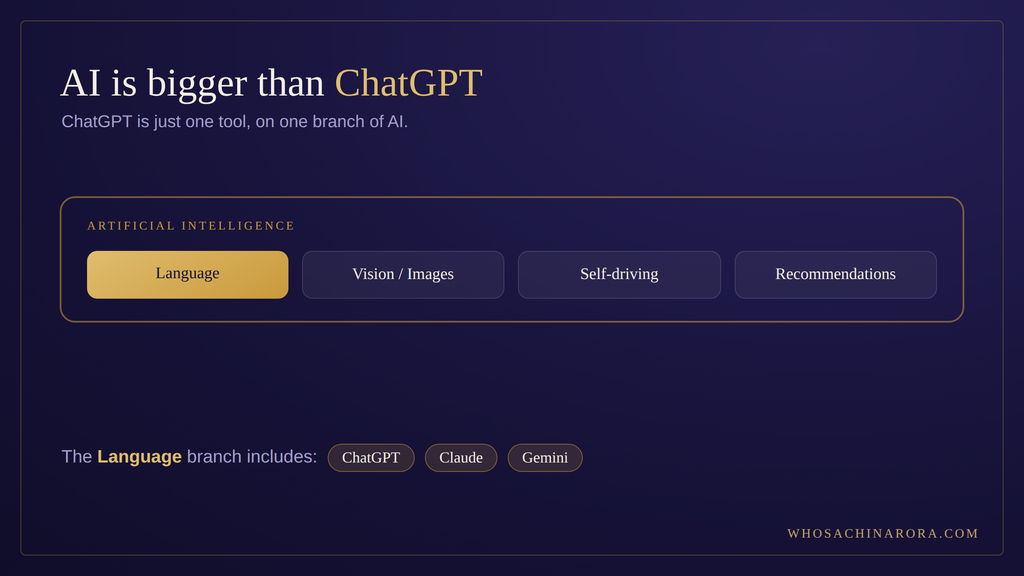
Most people believe AI equals ChatGPT. Picture AI as a huge tree instead. One branch understands language (that’s where tools like ChatGPT, Claude and Gemini live), another branch sees images, and another drives cars. ChatGPT is just one fruit on one branch. The moment you see this, AI stops being one scary thing and becomes a toolbox you can calmly pick from.
2. Learn to ask AI properly — this is 80% of the game
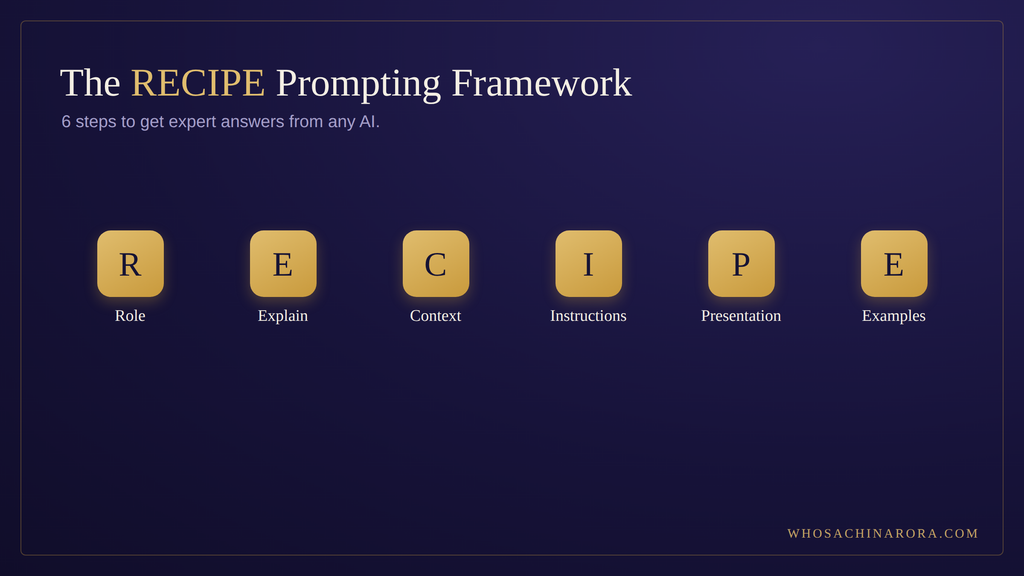
Most people get weak answers from AI and blame the AI. The truth is that the problem is usually the question — the “prompt.” After years of teaching complete beginners, I created a simple six-step formula called the RECIPE prompting framework: Role, Explain, Context, Instructions, Presentation, Examples. Give the AI a role (“you are an experienced consultant”), explain the task clearly, add your context, set the rules, choose the format you want, and show one example. The same AI that gave you an average answer will now give you an expert one.
3. Match the right tool to the task
You wouldn’t use a bulldozer to hammer a nail at home. A small, quick job needs a fast, light tool; a heavy analysis needs a more powerful one. The real skill is not memorising every tool — it is learning to match the tool to the task.
4. Start small, and use AI every day
Don’t wait until you “learn everything.” Use AI for one real task today — writing a message, planning your week, or drafting a reply to a customer. Ten focused minutes a day for one month will teach you more than any amount of theory.
5. Keep your data safe
Use AI freely to learn and work, but never type sensitive details — passwords, bank or card numbers, OTPs, or Aadhaar — into public AI tools. Knowing where your data goes is part of becoming truly AI-smart.
The AI wave will not wait for anyone. But it also will not leave behind anyone who is simply willing to learn. Always remember:
“AI aapki job nahi leta — wo insaan leta hai jisne AI seekh li.” — AI won’t take your job; a person who has learned AI will.
If a non-technical man who once sold newspapers on the street can learn AI — and even build an AI platform along the way — then so can you. Start today. Start simple. And make AI work for you.
About the Author

Sachin Arora is an AI Trainer, Educator and Business Consultant on a mission to make AI simple for every Indian. A non-technical B.Com graduate who taught himself AI, he trains students, professionals and businesses across India in plain Hinglish — no jargon, no coding. He runs the free “100 Days of AI” learning series and created the RECIPE prompting framework.
Learn more at whosachinarora.com.


Recent Comments